Current MIA Scholars
Current Scholars

Taya Lewis
Taya Lewis hadn’t decided what career she wanted to pursue until she became a pupil at Mt Albert Grammar school in Auckland and experienced its eight hectare working farm.
“I took agriculture at school and really loved it, particularly the business side,” says Taya, 20, one of the five students selected for Meat Industry Association (MIA) scholarships in 2026.
Now in her third year of university, studying for a Bachelor of Commerce and Agriculture at Lincoln University, Taya hopes to work in the economic advisory field for the red meat sector.
“That’s an area I particularly enjoy and I’m also really interested in working to help farmers maximise their performance both in terms of finance and sustainability.”
Taya has selected study topics to support a future career in the sector.
“This year, I am taking papers in agricultural banking, economics, animals science, taxation and beef and wool production.
“Quite a lot of my studies so far have been focused on dairy, so I saw the scholarship as a really good opportunity to learn more about red meat and wool and the supply chain. It’s such an interesting industry and is so important to our economy.”
Every year, the MIA provides scholarships of $5,000 per annum for undergraduates and $10,000 per annum for post-graduate students. All are tertiary students, studying a subject relevant to the red meat processing industry and planning a career in the sector beyond the farm gate.
As well as financial support, MIA scholars benefit from the organisation’s mentoring programme and participation in a range of industry events and networking opportunities. Assistance may also be provided to help them to secure vacation or part-time work in the meat processing industry.
Taya represented New Zealand at basketball at under-18 level and also has a basketball scholarship to Lincoln, playing for the university team.
“The MIA scholarship will be a big help financially towards my student loan but for me the biggest thing is the connections I will make.
“I worked in relief milking over my last summer holidays but am really hoping I can get part time work with a meat processing company.
“It’s an exciting time to be looking at a career in the sector because New Zealand is renowned for high quality red meat and I’m looking forward to seeing what happens with the new Free Trade Agreement with India.”
Lara Murdoch
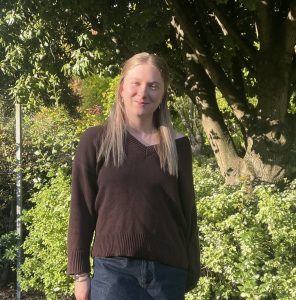
A strong interest in how product gets from the farm to international markets influenced Lara Murdoch’s degree choices.
Lara, aged 18, from St Albans, Christchurch, is in the first year of her conjoint degree studies in chemical and process engineering and supply chain management at the University of Canterbury.
“I chose chemical and process engineering because I enjoy the relevant subjects – calculus, chemistry and physics – and the problem solving aspect of engineering,” says Lara, one of five new Meat Industry Association scholars in 2026.
“But I am also very interested in commerce and how you get product to destinations and how that all links together. My dad works in supply chain management and I enjoy hearing about what he does.”
Every year, the MIA provides scholarships of $5,000 per annum for undergraduates and $10,000 per annum for post-graduate students. All are tertiary students, studying a subject relevant to the red meat processing industry and planning a career in the sector beyond the farm gate.
As well as financial support, MIA scholars benefit from the organisation’s mentoring programme and participation in a range of industry events and networking opportunities. Assistance may also be provided to help them to secure vacation or part-time work in the meat processing industry.
Lara says the scholarship will really help with some of her expenses as a student.
“Both the financial and mentoring side will help me set myself up for the future. I am really looking forward to the opportunities provided to network and meeting like-minded people with an interest in the sector and people already working in the sector.
“I want to find out as much as I can to be best prepared to go into the industry. Red meat is so important to our economy. I think the sector is only going to grow, so I see it as a very good industry to get into.”
Lara is also hoping the scholarship will help her to gain practical experience while she is studying.
“In the future, I see myself in the processing side and would like to combine both my areas of study to improve sustainability and efficiency in the process.
“I would really like to find a holiday job in the sector. With engineering, you don’t usually get an internship until you have finished your second year so, ahead of that, it would be really cool if I could find holiday work on the supply chain side.”

Elea Hargreaves
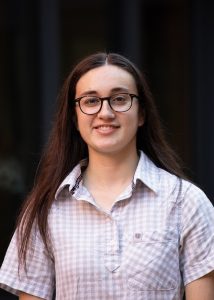
Elea Hargreaves spent her early childhood in Paris, where her father had a restaurant, so “grew up with the French food culture”.
Now 18-year-old Elea, one of five new Meat Industry Association scholars for 2026, is looking to turn that experience into a career in the red meat sector. She is studying for a Bachelor of Food Science, minoring in Marketing, at the University of Otago.
“My mum is Kiwi, so we moved to New Zealand when I was eight,” says Elea, from Whakamārama, Bay of Plenty.
“My dad is now in the Kiwifruit industry. We live on a lifestyle block and have some sheep and cows so I know how satisfying it is to grow good food.
“I love chemistry, biology and innovation and that is what drew me to food science. Plus, a benefit is that it has some specific papers in meat science including food microbiology and product development.
“I feel that will be useful to me going into the red meat industry.”
Every year, the MIA provides scholarships of $5,000 per annum for undergraduates and $10,000 per annum for post-graduate students. All are tertiary students, studying a subject relevant to the red meat processing industry and planning a career in the sector beyond the farm gate.
As well as financial support, MIA scholars benefit from the organisation’s mentoring programme and participation in a range of industry events and networking opportunities. Assistance may also be provided to help them to secure vacation or part-time work in the meat processing industry.
“Financially, the scholarship will allow me to invest more time in study as well as providing industry involvement,” says Elea.
“The mentoring side is really important for me. I feel that communication and sharing of knowledge will be really powerful and I am really looking forward to going to the Red Meat Sector Conference in September. I’m hoping that will all help me to create connections in the sector.”
In the future, Elea can see herself working in the product development or marketing side of the industry.
“I would love to be able to combine my science background with an understanding of what consumers value in the meat industry. I am also very interested in the international side. “I find it interesting because it is such a large and innovative sector and there are so many opportunities. It’s an industry that is always evolving and I find the new technology and new product development aspect really exciting.”

Ben Ballantyne
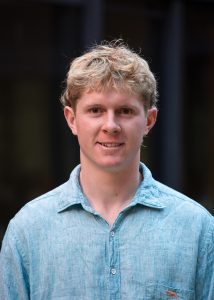
After three months working as a lamb trimmer at Silver Fern Farms’ Finegand processing plant in South Otago, Ben Ballantyne from Wellington has his sights on a career in the meat industry.
Ben, one of the Meat Industry Association’s five new scholars for 2026, applied for the role with SFF to support his final year of studies, but says the opportunity had even greater benefits.
“I was planning on joining the army reserves and doing my training over the summer, but an eye surgery I had a couple of years ago meant my eyesight didn’t meet the requirements” says Ben, who is studying a BCom majoring in marketing with a minor in economics at the University of Otago.
“There were no summer jobs going in Wellington that stuck out to me, so I applied to Finegand and ended up working there from November through to January.
“My mates all told me how tough it was going to be, but once I began I really loved it. I didn’t know anyone or anything to start with but the training was thorough and everyone was really friendly. The hardest part was probably getting up at 3am to catch the bus from Dunedin to Balclutha.
“My co-workers were always helpful and I quickly took an interest in the business side of things, especially the supply chain as it related to my study.”
Ben worked as a trimmer in the secondary lamb butchery.
“I started off trimming racks and shoulder chops, and ended up learning how to bone out legs and forequarters as I got quicker with my knives.
“It made me aware of the skill levels and the real world productivity implications of doing your job well and not slowing the line down – and it was interesting thinking about where the product could end up around the globe.”
As well as processing skills, Ben says he learned a lot about workplace health and safety and food hygiene.
“It’s a unique skillset and working on the floor gave me some good exposure to the industry. I loved it. There was a real focus on progression and setting workers up to succeed.”
Every year, the MIA provides scholarships of $5,000 per annum for undergraduates and $10,000 per annum for post-graduate students. All are tertiary students, studying a subject relevant to the red meat processing industry and planning a career in the sector beyond the farm gate.
As well as financial support, MIA scholars benefit from the organisation’s mentoring programme and participation in a range of industry events and networking opportunities. Assistance may also be provided to help them to secure vacation or part-time work in the meat processing industry.
“A few days into the job, one of my trainers suggested I should look at the Silver Fern Farms graduate programme,” says Ben. “I went online, had a look, and it really sparked my interest.
“I knew that if I wanted to get into their graduate programme, I needed to start preparing early, so I reviewed my university papers and selected those that would be most useful for a career in the sector, including business to business marketing, sales and an international trade paper.
“After adding my work at Silver Fern Farms to my LinkedIn profile, the MIA scholarship application popped up in my feed.
“It was too good an opportunity to pass up.”
Ben says the financial support was attractive but the mentoring aspect is what leapt out to him.
“The mentoring is probably the biggest part for me. You can’t put a dollar figure on the opportunities to connect with industry leaders offered through the programme. I am so looking forward to that and the learning that comes from it.”
When I found out I had been awarded a scholarship, I made sure to go and thank my trainer at Finegand for opening the door to the opportunity.
“The red meat sector is such an important industry for New Zealand. It’s our second biggest export and the country we live in today would be vastly different without it.
“We have some of the best conditions for producing red meat but to have a preferential product, especially in such a dynamic sector, we have to do it right.
“I’d love to get some experience in brand management or sales. I think if you are working in those areas, you are at the cutting edge of the market, supporting some impactful work.
“Wherever I end up, the experience of working in a processing plant, and being able to appreciate the effort that goes into the product will stay with me forever.”

Shaun Woods
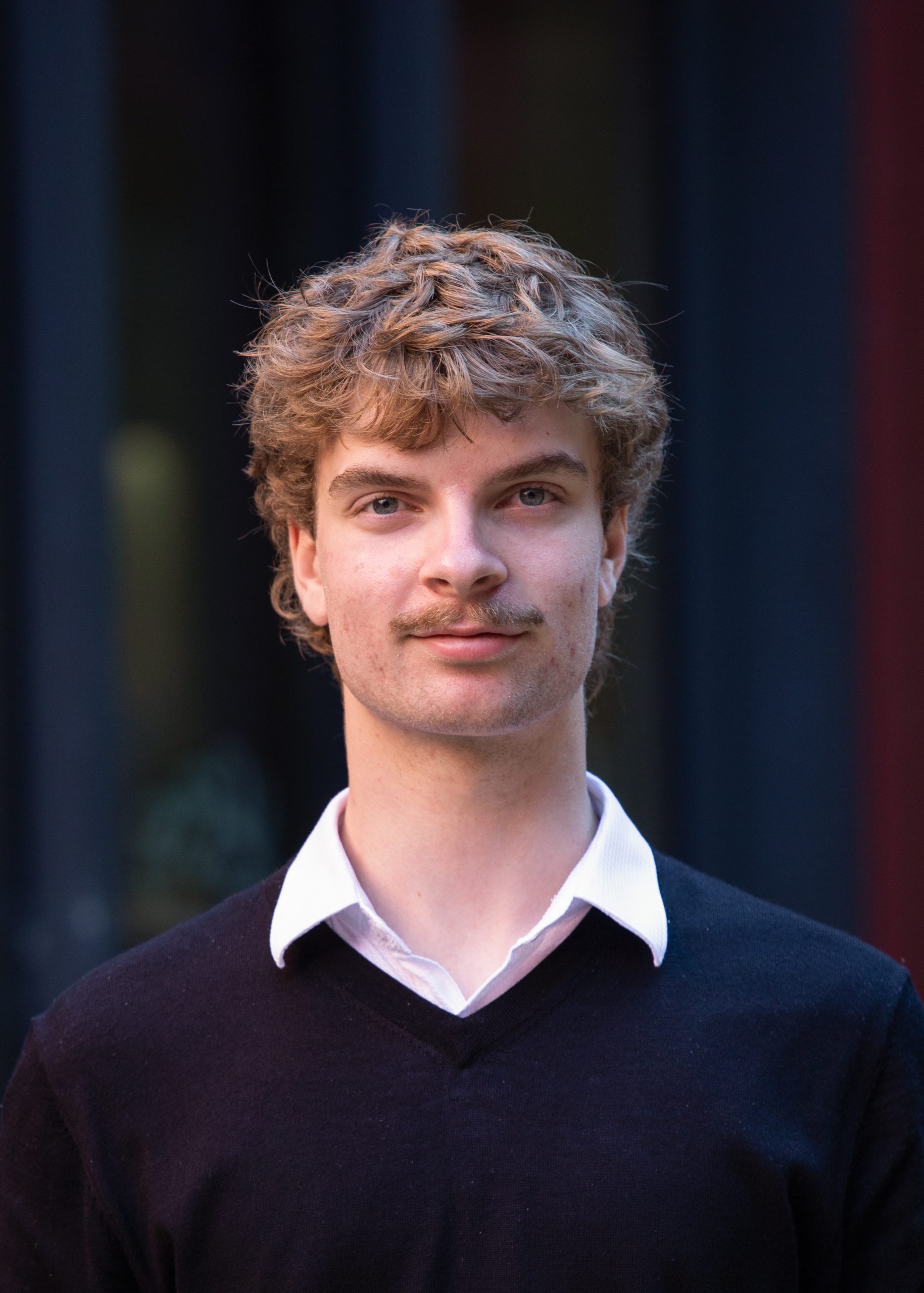
Shaun Woods has worked in several different areas of the red meat sector and he sees being selected as a Meat Industry Association scholar as a good way of investigating where his future plans lie.
Shaun, aged 26, works full time as a technical auditor for ANZCO Foods’ processing plant in Blenheim, while also studying for a Bachelor of Agricultural Science through Massey University.
“I grew up in Marlborough and most of my family are in the viticulture industry,” says Shaun, one of five new MIA scholars for 2026.
“After finishing my schooling, I went adventuring for a few years, working in agriculture, including a season working as a herd manager dairy farming, trying to find out what I would like.
“A number of people suggested I try meat processing and I had friends and family working in meat works, so in 2022 I joined AFFCO’s plant in Rangiuru in Western Bay of Plenty.”
Shaun then moved to AFFCO’s Manawatu plant as a butcher — and was also chair of Manawatu District Young Farmers – before moving back to Blenheim to join ANZCO in his current role in November 2025.
“Having been out of school for a few years, I decided to do a certificate in science and technology to see if I was up to completing more tertiary study,” he says. “I found that enjoyable, so decided to do a degree.
“It was a choice between agriscience and agribusiness but I felt agriscience could take me further with opportunities in the red meat industry, both on the environment side and the business side.
“I’ve completed just over one year of study and loving it. I’m doing it by distance learning and working full time and also achieving full time credits in my study.”
Shaun has also been a finalist in MIA’s Dragon’s Den initiative, which challenges Kiwis to develop innovative and practical solutions to enhance export value and advance the country’s red meat sector.
Every year, the MIA provides scholarships of $5,000 per annum for undergraduates and $10,000 per annum for post-graduate students.
All are tertiary students, studying a subject relevant to the red meat processing industry and planning a career in the sector beyond the farm gate.
As well as financial support, MIA scholars benefit from the organisation’s mentoring programme and participation in a range of industry events and networking opportunities.
Assistance may also be provided to help them to secure vacation or part-time work in the meat processing industry.
“Financially, the scholarship alleviates a lot of the stress associated with living costs nowadays and takes the pressure off,” says Shaun.
But the mentoring side was the main driver for me, as a way to increase my networks. I see this as a great opportunity I have to grab and run with.
“I am really looking forward to attending the Red Meat Sector Conference in September. I have heard so many good things about it.
“For me, the red meat sector is so important to the economy of New Zealand.
“I see my future in the industry but I’m not sure where that will be yet. I’ve dabbled in quite a few areas of the sector and I am really looking forward to using the scholarship and the learnings, connections and networks that brings to establish where I want to land myself.”
Past scholars

Katie Hollands
Bachelor of Agribusiness
MIA scholar Katie Hollands didn’t grow up in farming but spent lots of time on schoolfriends’ family farms, and that sparked her interest.
Now Katie, from Cambridge, is in her third year at Lincoln University studying for a Bachelor of Agribusiness and Food Marketing and planning a career in the red meat sector.
“I went to Waikato Diocesan School and lots of my friends were from farming families,” she says. “I enjoyed business studies at school and, combined with my passion for the primary industries and the food it produces, made this an ideal course of study. I’m really enjoying it. Lincoln is an awesome place to be a student.
“I’m interested in the economics and business side of the industry, maximizing export value and capitalizing on trade, so would like to work in that area.”
Every year, the MIA provides scholarships of $5,000 per annum for undergraduate and $10,000 for post-graduate students. All are tertiary students studying a subject relevant to the red meat processing industry and planning a career in the sector beyond the farm gate.
As well as financial support, MIA scholars benefit from the organization’s mentoring programme and participation in a range of industry events and networking opportunities. Assistance may also be provided to help them secure vacation or part-time work in the meat processing industry.
Katie already has experience in the primary sector in horticulture, through carrot picking and processing and also blueberry picking, but she is keen to gain experience in the red meat sector and is looking for part-time work in that area this year.
“The MIA scholarship really stood out for me because of the mentoring opportunities and being able to attend the Red Meat Sector Conference and also the opportunity of employment in the sector,” she says.
“It is such an important sector. Red meat is the backbone of our primary industries. Red meat and dairy are our biggest revenue earners, a major part of our GDP and, importantly, also a very big employer of New Zealanders.”

Georgie Te Raki
Bachelors of Commerce
Meat Industry Association scholar Georgia Te Raki already has hands-on experience in the red meat processing industry — and now she’s setting her sights on a career in marketing within the sector.
Georgia, from Dunedin, is in her first year of a Bachelor of Commerce, majoring in Marketing, at the University of Otago. Alongside her studies, she works casually at ANZCO Foods’ Green Island site.
Her interest in business and economics was sparked at Queen’s High School in Dunedin. “Studying business studies, economics, and accounting at school really developed my interest in how the New Zealand economy works,” says Georgia.
“It also made me really interested in marketing — particularly in why people make the purchasing choices they do. I really enjoy the work at ANZCO. I’m a pack-room operator and I like that there’s always something that needs doing. The environment is positive, and I feel like I’m part of something bigger.”
She’s also drawn to the global scale of the industry: “The red meat sector is a really interesting industry. It’s such an important part of the New Zealand economy and also a major player globally.”
Each year, the Meat Industry Association (MIA) awards scholarships of $5,000 per annum for undergraduate students and $10,000 per annum for post-graduate students. These are offered to tertiary students studying subjects relevant to the red meat processing industry and aiming to build careers in the sector beyond the farm gate.
In addition to financial support, MIA scholars benefit from a mentoring programme and have the opportunity to participate in a variety of industry events and networking activities. Scholars may also receive help in securing vacation or part-time roles in the meat processing industry.
“The scholarship funding will definitely be very useful in helping with the costs of my studies,” says Georgia. “I’m also really looking forward to the mentoring and networking. That’s going to be very useful and interesting.”

Zoe McElrea
Bachelors of Laws and Arts
University of Otago student Zoe McElrea grew up helping out on her family’s sheep and deer farm, but she has her sights set on a career in a different part of the red meat sector.
“I would like to work at a high level in the sector, using my degree as a trade negotiator in the industry or with MFAT,” says Zoe, an MIA scholar from Milton. She is currently studying towards a Bachelor of Laws and a Bachelor of Arts, majoring in Politics and minoring in Economics, with an emphasis on international and trade politics.
“I have a twin brother, and we’ve always been very involved on the farm, which has been in our family for four generations. We really enjoy it—everything from doing the lambing beat to the baleage. It’s just a really good industry. People are so great and down to earth, and they genuinely want the best for everyone.”
Zoe attended Tokomairiro High School and later Columba College in Dunedin. “My brother and I stayed very involved in the industry. We competed in Junior Young Farmer of the Year together and won when I was in my final year at school. I’ve also joined the Young Farmers club in Dunedin.”
Her passion for both agriculture and global affairs drives her career ambition: “This is the industry and the people I want to be working with. I’ve always been very interested in communication and how society makes decisions and policy—particularly at an international level.”
Every year, the Meat Industry Association (MIA) provides scholarships of $5,000 per annum for undergraduate students and $10,000 per annum for postgraduate students. These are awarded to tertiary students studying subjects relevant to the red meat processing industry and planning a career in the sector beyond the farm gate.
In addition to financial support, MIA scholars benefit from the organisation’s mentoring programme and gain access to industry events and networking opportunities. Scholars may also receive help in securing vacation or part-time work in the meat processing industry.
“When I saw the scholarship, it just leapt out at me,” says Zoe. “The financial support will be great, but the connections to the industry and getting to meet other people in the wider sector is an amazing opportunity. I’m really looking forward to connecting with fellow scholars and with leaders in the industry.”
“Ultimately, the sector is full of good people wanting to do good stuff for New Zealand. To thrive as a country, we need to have a strong GDP, and we rely on exports to do so. The red meat industry is a big part of that, and I’m excited to be involved in making that even stronger.”
Nicole Petersen
Bachelor of Agribusiness
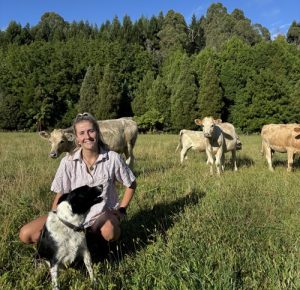
Growing up on farms and orchards, Nicole Petersen gained hands-on experience in both the agriculture and horticulture sectors — but she sees her future in the red meat processing industry.
“I lived on a dairy farm until I was 11,” says Nicole, an MIA scholar from Ōpōtiki who is in her third year of studying for a Bachelor of Agribusiness and Food Marketing at Lincoln University.
“Then my parents purchased an 80-hectare lifestyle block on the other side of town to farm dry stock cattle, which also includes a couple of avocado orchards and a truffle orchard, while my older brother has continued to manage the dairy farm.
“My parents have always let me be very involved with all the processes on-farm, and I reared calves through most of my high school years. I’m very interested in both the beef and horticulture sectors thanks to the practical experiences that my parents have provided me with.”
Despite her broad exposure to farming, Nicole’s interests lie beyond the farm gate: “While I’ve had hands-on experience in farming, I’m really interested in what goes on in the meat processing side, particularly in packaging and marketing.”
Nicole is thriving at university: “I am absolutely loving the degree. Lincoln is an amazing place to study — all the lecturers are passionate about what they are teaching, and that has helped me to figure out what I want to do in my career.”
Each year, the Meat Industry Association (MIA) offers scholarships of $5,000 per annum for undergraduate students and $10,000 per annum for post-graduate students. These are awarded to tertiary students studying subjects relevant to the red meat processing industry and planning careers in the sector beyond the farm gate.
In addition to financial support, MIA scholars benefit from the organisation’s mentoring programme and can participate in a range of industry events and networking opportunities. Assistance may also be provided to help secure vacation or part-time work in the meat processing industry.
“The scholarship is going to help me so much,” says Nicole. “It will help with living costs, but it’s also given me a lot more freedom in selecting my courses. Some are more expensive than others, so now I can make decisions based on what I will get out of a course to benefit my future career.
“The mentoring is going to be incredible. I don’t yet have any experience on the processing side of the red meat sector, so I really want to learn more about that — and I’m really looking forward to the networking opportunities.”

Riley King
Bachelors of Science
Riley King is aiming to combine his interest in science and passion for the environment in a career in the red meat processing sector.
Originally from Blenheim, Riley is a new Meat Industry Association (MIA) Scholar for 2025 and is in his first year at Lincoln University, studying for a Bachelor of Science, majoring in Environmental Science.
“I don’t come from an agricultural background, but I have always enjoyed science subjects, and this degree combines that with my interest in the environment,” says Riley, who attended Marlborough Boys’ College.
“I’m interested in a future career in the red meat processing sector because the more I have looked into it, the more I’ve learned about how important it is to New Zealand. There are about 60 processing plants around the country. It’s a major employer and exports almost $11 million worth of product each year.”
He adds, “In the future, I’d like to be able to apply my science background to sustainable and environmental issues that are relevant to the sector—from improving resource efficiency to waste management—and to help with meeting stricter environmental regulations, as well as customer and consumer expectations.”
Every year, the MIA provides scholarships of $5,000 per annum for undergraduate students and $10,000 per annum for post-graduate students. These are awarded to tertiary students studying subjects relevant to the red meat processing industry, with a view to building careers in the sector beyond the farm gate.
Riley says the financial support will be a great help with his living costs as a student. In addition to funding, MIA scholars benefit from the organisation’s mentoring programme and gain access to a range of industry events and networking opportunities. Assistance may also be provided to help scholars secure vacation or part-time work in the meat processing industry.
“Through the scholar meetings, attending the Red Meat Conference, and networking, the MIA really looks to set you up for a future career in the sector,” says Riley. “I’m also hoping to gain experience working in the industry while I’m studying – I’m very interested in visiting or gaining experience in a processing plant.”